Making Room for Hope Ashford Communities at Entrata Summit 2026...


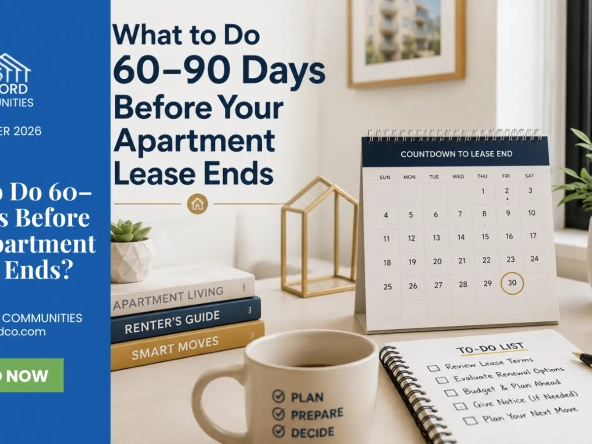
What to Do 60–90 Days Before Your Apartment Lease Ends

Your apartment lease may still have a few months left, but What to do 60–90 Days Before Your Apartment Lease Ends. Waiting until the last few weeks can make moving, renewing, or finding a new apartment more stressful and expensive.
Starting early gives you time to review your options, understand your lease requirements, compare apartments, organize your finances, and make a smooth transition into your next home.
Whether you currently live in Houston, Austin, Odessa, Pearland, Baytown, or San Marcos, this 60–90 day apartment lease checklist can help you stay ahead of the process.
1. Check Your Lease Agreement
The first thing you should do is review your current lease.
Look for important information about:
- Lease expiration date
- Required notice period
- Renewal terms
- Move-out requirements
- Security deposit conditions
- Cleaning requirements
- Early termination provisions
- Key or access-device return instructions
- Any applicable fees
Your lease should explain how and when you need to provide notice if you plan to move out. Requirements can vary by lease, so do not assume that every apartment community follows the same process.
Tip: Save a copy of your lease and highlight important dates so you can refer back to them during the transition.
2. Decide Whether You Want to Renew or Move
By 60–90 days before your lease ends, start thinking seriously about your next step.
Ask yourself:
Do I want to stay in my current apartment, or is it time for a change?
Renewing may make sense if you like your community, location, apartment layout, and monthly expenses. Moving may make sense if your budget, commute, household size, lifestyle, or housing needs have changed.
Consider your priorities, including:
- Monthly rent
- Apartment size
- Number of bedrooms
- Location
- Commute to work or school
- Parking
- Pet policies
- Amenities
- Maintenance and resident services
- Neighborhood convenience
Making this decision early gives you more time to research your options instead of making a last-minute choice.
3. Ask About Lease Renewal Options
If you are considering staying, contact your apartment management team and ask about renewal options.
Find out:
- Whether your apartment is available for renewal
- Available lease terms
- New rental rates
- Renewal deadlines
- Any changes to fees or policies
- Available apartment upgrades or transfers
Do not wait until your lease is almost over to start this conversation. Renewal options and availability can change, and starting early gives you more time to review the information.
At Ashford Communities, residents can connect with their community team to discuss their housing needs and available options.
4. Start Your Apartment Search Early
Planning to move? Begin your apartment search while you still have plenty of time.
Start by creating a list of what you need in your next apartment. Separate your requirements into must-haves and nice-to-haves.
For example:
Must-haves
- Two bedrooms
- Specific location
- Pet-friendly
- Parking
- Within budget
Nice-to-haves
- Swimming pool
- Fitness center
- Outdoor space
- Updated finishes
- Additional storage
This makes it easier to compare communities without getting distracted by features that may not be essential to you.
5. Set a Realistic Moving Budget
Moving involves more than just monthly rent.
Create a budget that includes potential expenses such as:
- Application fees
- Deposits
- Moving services
- Truck rental
- Packing supplies
- Utility deposits or transfers
- Cleaning
- Transportation
- New furniture or household items
You should also consider the timing of your final rent payment, current security deposit, and any other costs outlined in your lease.
Planning these expenses 60–90 days in advance can make your move much easier financially.
6. Compare Apartment Locations Carefully
When searching for your next apartment, do not evaluate a community based solely on the advertised rent.
Look at the overall convenience of the location.
Depending on where you live, you may want to consider access to:
- Major highways
- Workplaces
- Schools and colleges
- Grocery stores
- Restaurants
- Medical facilities
- Parks and recreation
- Public transportation
- Shopping centers
For renters in cities such as Houston and Austin, commute times can be an especially important part of your decision. In areas such as Odessa, Pearland, Baytown, and San Marcos, nearby roads, employment centers, shopping, and everyday services can also have a significant impact on your daily routine.
7. Declutter Before You Start Packing
One of the biggest mistakes renters make is packing everything and deciding what to keep later.
Instead, start decluttering early.
Go through your:
- Clothes
- Kitchen items
- Furniture
- Electronics
- Documents
- Storage areas
- Decorations
- Unused household items
Use a simple system: keep, donate, sell, or discard.
The less you have to move, the easier the moving process becomes.
Starting 60–90 days ahead also means you can handle decluttering gradually instead of spending an entire weekend sorting through your belongings.
8. Make a List of Repairs and Maintenance Issues
Take a careful look around your apartment.
Have you noticed:
- A dripping faucet?
- Damaged blinds?
- Loose handles?
- A broken appliance?
- Wall damage?
- A door that does not close properly?
- Any other maintenance issue?
Report legitimate maintenance concerns to your apartment management team rather than waiting until move-out.
Keeping track of maintenance requests can also help you understand what has already been reported and addressed.
At the same time, avoid making unauthorized alterations or repairs that could affect your move-out responsibilities.
9. Review Your Security Deposit Expectations
Your lease should explain the conditions associated with your security deposit.
As your move-out approaches, review those requirements and make a plan to leave the apartment in the condition specified by your lease, taking normal wear and tear into account where applicable.
You may want to:
- Clean the apartment thoroughly
- Remove personal belongings
- Dispose of unwanted items properly
- Follow move-out instructions
- Return keys and access devices as required
- Document the apartment’s condition
Taking photos of the apartment around move-out can also help you maintain a personal record of its condition.
10. Start Organizing Your Documents
Moving often involves more paperwork than people expect.
Keep important documents organized in one place, including:
- Current lease agreement
- Renewal or move-out notice
- New lease documents
- Identification
- Application information
- Moving company details
- Utility account information
- Rent payment records
Having these documents readily available can save time when you need them during the final weeks of your lease.
11. Plan Your Utilities and Address Change
Once your move is confirmed, make a list of services that need to be transferred, canceled, or updated.
Depending on your situation, this may include:
- Electricity
- Water
- Internet
- Gas
- Trash services
- Renter’s insurance
- Mail forwarding
Remember to update your address with banks, employers, subscription services, insurance providers, government agencies, and other organizations that need your current information.
12. Schedule Your Move Early
If you are moving, do not wait until the final week to arrange everything.
Start comparing moving options early, especially if you plan to move during a busy period.
Depending on your needs, you may choose:
- Professional movers
- A rental truck
- Friends or family
- A portable storage solution
Create a basic moving-day schedule covering packing, transportation, cleaning, key return, and access to your new apartment.
The more organized your moving day is, the less stressful it tends to be.
As your lease expiration date gets closer, create one final checklist.
Before Moving Out:
- Review your lease one more time
- Complete required notice
- Confirm your move-out date
- Finish packing
- Clean the apartment
- Remove personal belongings
- Take photos
- Follow community move-out instructions
- Return keys and access devices
- Confirm your forwarding address
- Transfer or cancel utilities
A checklist reduces the chance of forgetting a small but important detail during a busy move.
Your 60–90 Day Apartment Lease Timeline
Here is a simple timeline you can follow:
90 Days Before Lease End
Review your lease and determine your options. Decide whether you are leaning toward renewal or moving. Start researching apartments and reviewing your budget.
60 Days Before Lease End
Confirm your plans, review renewal information or continue your apartment search, and begin decluttering. Start organizing the financial and logistical side of your move.
30 Days Before Lease End
Finalize moving arrangements, confirm utilities, begin serious packing, and carefully follow your community’s move-out or renewal instructions.
Final Week
Complete cleaning, remove belongings, photograph the apartment, complete any required final steps, and make sure keys or access devices are returned according to your community’s instructions.
Find Your Next Apartment With Ashford Communities
Planning ahead can turn the end of your lease from a stressful deadline into an organized transition.
Whether you are renewing your current home or searching for something new, starting 60–90 days before your lease ends gives you time to make thoughtful decisions without unnecessary pressure.
Ashford Communities offers rental and leasing options across Houston, Austin, Odessa, Pearland, Baytown, and San Marcos, with communities designed to provide convenient apartment living and a place you can feel at home.
Ready to start planning your next move? Explore Ashford Communities and find a place to belong.
FOLLOW US ON
Related Posts:-

by admin
What to Do 60–90 Days Before Your Apartment Lease Ends Your...
by admin

Cozy Apartment Decor Ideas for Fall in Texas Fall in Texas...
by admin
Understanding Apartment Lease Agreements: A Beginner’s...
by admin