Small-Space Organization Hacks for Apartments Under 800 Sq....


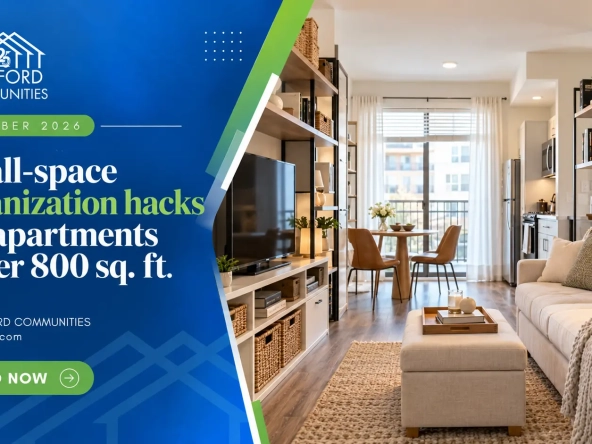
Small-Space Organization Hacks for Apartments Under 800 Sq. Ft.

Living in an apartment under 800 square feet doesn’t mean sacrificing comfort, style, or functionality. With the right organization strategies, even a compact apartment can feel spacious, organized, and welcoming. Whether you’re moving into your first apartment, downsizing, or looking to make better use of your current space, a few smart changes can transform the way you live.
For renters, maximizing every square foot is essential. From using vertical storage and choosing multifunctional furniture to organizing closets and creating clutter-free living areas, the right small-apartment organization ideas can help you make the most of your home.
At Ashford Communities, we understand that a comfortable home is about more than square footage. It’s about creating a space where you can relax, recharge, and feel at home. Here are some practical apartment organization hacks to help you make the most of your space.
1. Make the Most of Vertical Storage Space
When floor space is limited, look up. Walls and vertical areas often provide valuable storage opportunities that apartment residents overlook.
Instead of filling your apartment with bulky storage cabinets, use the available wall space to keep everyday essentials organized without making rooms feel crowded.
Try these vertical storage ideas:
- Install wall-mounted shelves for books, decorative items, and small storage baskets, where permitted by your lease.
- Use tall, narrow bookcases to store belongings without taking up too much floor space.
- Add over-the-door organizers for shoes, cleaning supplies, accessories, or toiletries.
- Use wall hooks for jackets, handbags, hats, and keys.
- Place frequently used items on accessible shelves and store occasional-use items higher up.
2. Choose Multifunctional Furniture
Furniture can make a significant difference in how spacious your apartment feels. In an apartment under 800 square feet, every piece should serve a purpose, and ideally, more than one.
Multifunctional furniture helps reduce clutter while making your living space more flexible.
Consider these space-saving furniture options:
- Storage ottomans: Store blankets, magazines, remote controls, or other living room essentials inside.
- Beds with built-in drawers: Keep extra bedding, seasonal clothing, and accessories organized beneath your mattress.
- Extendable dining tables: Use a compact table for everyday meals and extend it when guests visit.
- Nesting tables: Stack smaller tables together when they’re not needed.
- Foldable desks: Create a practical work-from-home setup that can be tucked away when your workday ends.
- Sofa beds: Make your living room more versatile when overnight guests visit.
Before purchasing furniture, measure your room and check the dimensions of each item. A piece that looks compact online may overwhelm a smaller room in person.
The goal is to create a functional home without filling every available corner with furniture.
3. Organize Your Closet to Maximize Every Inch
Closets can quickly become cluttered when clothing, shoes, accessories, and storage boxes compete for limited space. A well-organized closet makes it easier to find what you need and keeps your bedroom looking tidy.
Start by removing items you no longer use. Then organize the remaining belongings according to how frequently you need them.
Here are a few closet organization hacks:
- Use slim, matching hangers to make better use of hanging space.
- Add hanging organizers for folded clothes, handbags, and accessories.
- Store seasonal clothing in labeled containers under the bed or on upper shelves.
- Use drawer dividers to separate socks, undergarments, and smaller accessories.
- Arrange shoes on a vertical rack or in clear, stackable boxes.
- Use shelf dividers to prevent folded clothes and linens from becoming disorganized.
For a more efficient closet, keep everyday clothing at eye level and move seasonal or occasional-use items to less accessible areas.
A simple rule can help you maintain order: give every item a designated place and return it there after use.
4. Keep Your Kitchen Counters Clutter-Free
A small kitchen can feel crowded when appliances, utensils, groceries, and cookware occupy every available surface. The solution is to make better use of cabinets, drawers, and unused vertical space.
Start by keeping only the appliances and items you use regularly on your countertops. Store less frequently used equipment in cabinets to create more room for meal preparation.
Practical kitchen organization ideas include:
- Use stackable containers for dry ingredients such as rice, pasta, flour, and cereal.
- Add drawer organizers to separate cooking utensils and cutlery.
- Use shelf risers to create additional storage inside cabinets.
- Install an over-the-cabinet-door organizer for lightweight kitchen essentials, where appropriate.
- Store pots, pans, and lids together to make them easier to access.
- Use a compact rolling cart for extra storage if your kitchen layout allows it.
- Group similar items together, such as baking supplies, breakfast foods, and cooking ingredients.
Clear containers can also make it easier to identify pantry items and monitor what needs replenishing.
Small-space tip: Avoid buying storage containers before assessing what you already own. Choosing containers that fit your actual cabinet dimensions helps prevent wasted space and unnecessary spending.
5. Create a Clutter-Free Living Room
Your living room often serves multiple purposes, including relaxing, entertaining, watching television, and working from home. In a smaller apartment, keeping this space organized is essential for maintaining comfort and functionality.
Begin by identifying the activities you use the room for most often. Then arrange furniture and storage around those needs.
Try these simple living room organization hacks:
- Choose a coffee table with drawers or a hidden storage compartment.
- Use decorative baskets to store blankets, toys, books, and everyday essentials.
- Mount your television on the wall if permitted and appropriate for your setup.
- Use cable organizers to keep charging cords and electronic wires tidy.
- Arrange furniture to preserve clear walking paths.
- Limit decorative accessories to a few meaningful pieces rather than overcrowding shelves and tables.
- Choose furniture with exposed legs to create a lighter visual appearance.
You can also define separate areas within a single room. For example, a small rug can distinguish the seating area from a compact workspace without requiring a physical divider.
Keeping surfaces relatively clear can make your living room feel more open and easier to maintain.
6. Make the Most of Under-Bed Storage
The space beneath your bed is one of the most useful storage areas in a small apartment. Instead of leaving it empty or allowing items to accumulate randomly, turn it into an organized storage zone.
Under-bed storage works particularly well for belongings you don’t need every day.
Consider storing:
- Extra pillows, sheets, and blankets.
- Seasonal clothing and footwear.
- Luggage and travel accessories.
- Extra towels and linens.
- Items you use occasionally, such as holiday decorations.
Choose low-profile storage containers that fit comfortably beneath your bed. Containers with wheels make it easier to retrieve belongings, while clear sides or labels help you identify their contents.
If you are shopping for a new bed, consider a platform bed with built-in drawers or a frame with sufficient clearance for storage bins.
Keep frequently used items in accessible drawers and reserve under-bed containers for belongings you need less often.
7. Use Smart Bathroom Storage Solutions
Bathrooms in smaller apartments often have limited counter space and cabinet storage. Toiletries, cleaning supplies, towels, and personal care products can quickly create clutter.
Fortunately, a few simple organization changes can make your bathroom more functional.
Try these bathroom storage ideas:
- Use drawer dividers to separate toiletries and grooming essentials.
- Add a freestanding shelf or compact cabinet if the layout permits.
- Store towels in baskets or on space-efficient shelving.
- Use a shower caddy to organize shampoos, conditioners, and body washes.
- Install removable hooks for towels and lightweight accessories where suitable.
- Keep daily-use products accessible and store backups elsewhere.
- Use stackable containers to organize smaller items beneath the sink.
Check the moisture resistance of any storage products you purchase, particularly those placed near showers or sinks.
A useful maintenance habit is to review your bathroom supplies monthly and discard expired products or packaging you no longer need.
8. Create a Functional Work-From-Home Corner
Working from home in an apartment under 800 square feet can be challenging when your desk, laptop, paperwork, and office supplies compete with your everyday living space.
You don’t necessarily need a separate room to create a productive workspace. A small, well-organized corner can be enough.
Here are some practical ways to create a home office in a compact apartment:
- Choose a narrow desk that fits against a wall.
- Use a foldable desk if you need to reclaim the space after working hours.
- Add a small filing unit or desktop organizer for documents and stationery.
- Use a laptop stand to improve desk organization and free up surface space.
- Manage charging cables with clips or cable sleeves.
- Store work supplies in a designated drawer or basket when they aren’t in use.
If your bedroom or living room must double as an office, choose a location that allows you to work comfortably without blocking doorways or frequently used areas.
Keeping your work materials together also makes it easier to transition between professional and personal time.
9. Use Mirrors, Lighting, and Color to Make Rooms Feel Larger
Organization isn’t only about storage. The way you arrange and decorate a room can also influence how spacious it feels.
Although mirrors and lighting don’t increase your apartment’s actual square footage, they can help create a brighter and more open atmosphere.
Consider these simple decorating strategies:
- Add mirrors: Position a mirror where it can reflect natural light or make a room feel visually deeper.
- Choose light colors: Soft whites, warm neutrals, and pale shades can help create a bright, cohesive appearance.
- Use layered lighting: Combine overhead lighting with floor lamps or table lamps to brighten darker corners.
- Keep window areas clear: Avoid placing bulky furniture directly in front of windows when possible.
- Use consistent color palettes: Coordinating furniture, textiles, and accessories can make smaller rooms feel less visually busy.
- Avoid oversized decorations: Choose artwork and decorative pieces that suit the scale of your room.
Renters can often achieve these improvements without permanent renovations. Mirrors, lamps, removable decor, and coordinated textiles provide flexible ways to personalize a home.
10. Divide Your Space Into Functional Zones
An apartment under 800 square feet may need to accommodate several activities in a relatively small area. Creating designated zones helps each part of your home serve a clear purpose.
For example, your living room might include a seating area, a reading corner, and a compact workspace. Your bedroom might combine sleeping, clothing storage, and a small dressing area.
You can establish these zones without building walls or installing permanent partitions.
Try these ideas:
- Place a small rug beneath your sofa and coffee table to define the living area.
- Use a compact desk and task lamp to establish a dedicated work zone.
- Position a bookcase or open shelving unit to create subtle separation between areas, provided it doesn’t obstruct natural light or walking paths.
- Use a bedside table with drawers to separate sleeping essentials from other belongings.
- Keep each zone equipped with the storage it needs.
Functional zones help reduce the feeling of clutter because belongings have a natural place to stay.
Before rearranging furniture, sketch a simple floor plan and measure your larger items. This can help you identify practical layouts without repeatedly moving heavy furniture.
11. Choose Storage Solutions That Work for Renters
Renting an apartment comes with different considerations than owning a home. Storage solutions should be practical, affordable, and compatible with your lease requirements.
Before investing in organization products, consider how easily they can be moved, reused, or adjusted when you relocate.
Renter-friendly options include:
- Freestanding bookshelves and cabinets.
- Removable hooks suitable for the intended surface and weight.
- Stackable storage bins.
- Over-the-door organizers.
- Rolling carts.
- Collapsible laundry hampers.
- Furniture with built-in storage.
- Modular shelving that can be reconfigured.
Avoid assuming that adhesive products are suitable for every wall or surface. Always follow the manufacturer’s instructions and check your lease before making modifications.
Portable storage solutions can also save time and money when moving to another apartment because many can be reused in a different layout.
Find an Apartment That Fits Your Lifestyle With Ashford Communities
A well-organized apartment can make everyday life more comfortable, even when you have less than 800 square feet to work with. With smart storage solutions, multifunctional furniture, thoughtful layouts, and consistent decluttering habits, you can create a home that feels practical and welcoming.
At Ashford Communities, we offer rental living options across Houston, Austin, Odessa, Pearland, Baytown, and San Marcos, Texas. Whether you’re looking for a comfortable home close to work, a practical living space, or a community that fits your lifestyle, exploring your options is a great place to start.
Ready to find your next apartment? Explore available rental homes with Ashford Communities and discover a space where you can make yourself at home.
FOLLOW US ON
Related Posts:-
by admin

How to Be a Good Neighbor Noise, Parking, Packages, and Shared...
by admin

Making Room for Hope Ashford Communities at Entrata Summit 2026...
by admin

What to Do 60–90 Days Before Your Apartment Lease Ends Your...
by admin